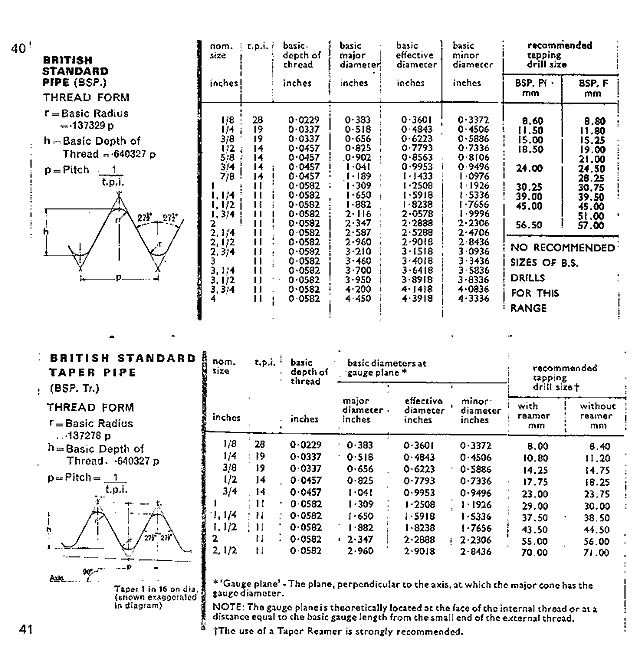
Not all threads in use are covered in this article.
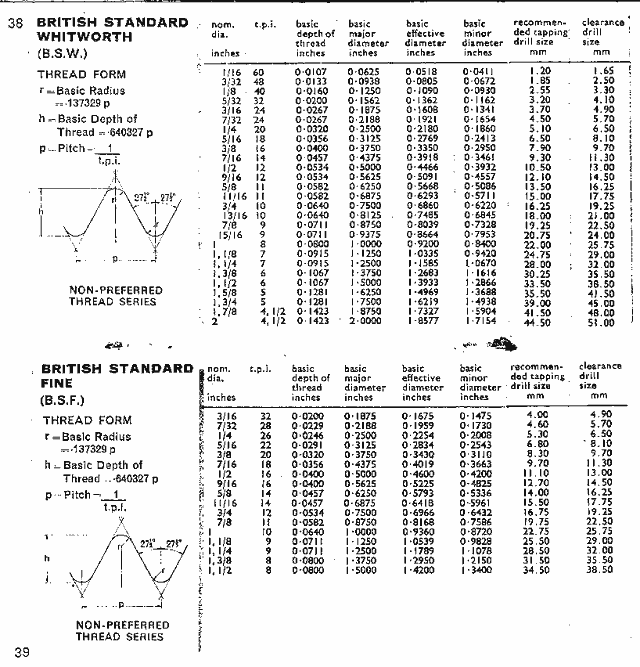
5/32" Whitworth threads are available left handed.
The M.E. range (Model Engineer) series which was developed especially for model and instrument making trade in the late 19th early 20th century includes 5/32" Whit form x 40 TPI and is still available.
Ignore the propaganda that states non-preferred threads.
These charts were issued in the days when
Metrication was being forced down our throats in the UK and we were going
to be banned from using it by Brussels, but thirty odd years later they
still have to be available.
Notes:
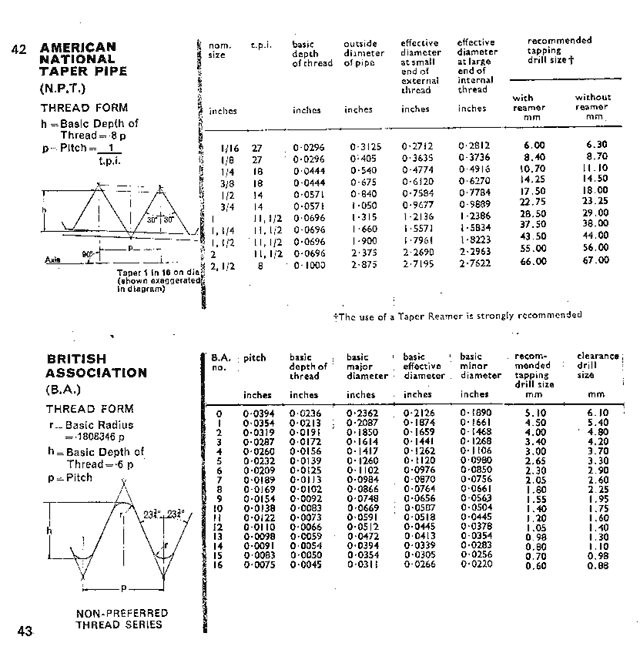
The closest B.A. thread to Meccano size is 3 B.A. but it is mainly used on electrical equipment and is not a preferred size.
4 B.A. is the most practical thread as the nut is 1/4" across the flats, which is compliant with a Meccano tin dreadful or real 1/4" A/F spanner.
My personal preference is for a 1/4" A/F combination (Ring and open ended). Ground down to about 2mm thick on the open ended part for use on lock nuts.
4 B.A. Nyloc Nuts (Nylon insert in the nut) are self locking, more professional for scale and more compact than the Meccano square one. They can be tapped out 5/32" Whitworth using a plug tap having had its end taken back by hand grinding to just before the thread starts.
B.A. Thread angle is 47.5 degrees and still
used on electrical fittings.
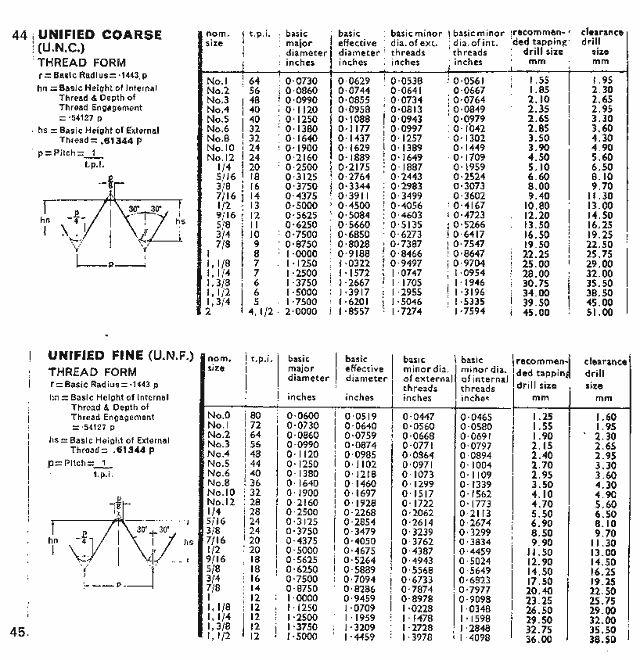
Nearest to Meccano thread: No 6 UNC x 32
TPI but the disadvantage is that it is a sloppy fit compared with 4 B.A..
No 8 is too large
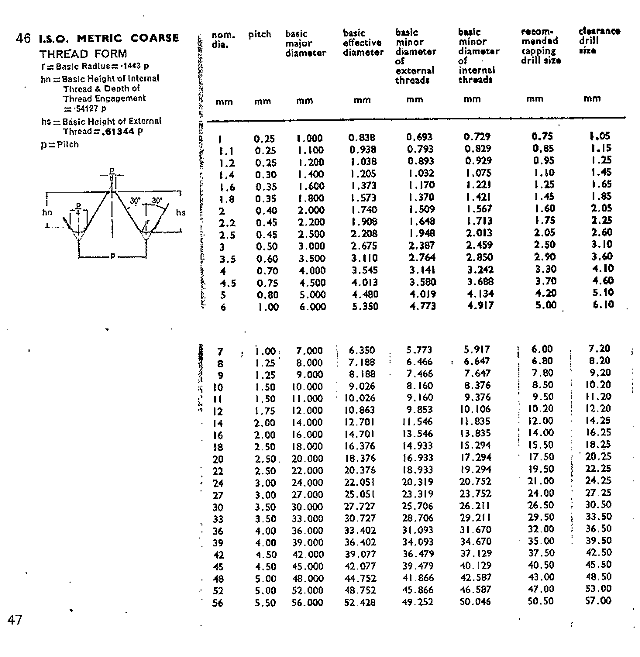
Nearest to Meccano size is 4mm Dia. (0.157")
IMPERIAL-METRIC CONVERSIONS
To convert Metric dimensions to Imperial
expressed in Decimal Inches:
Enter mm dimension and divide by 25.4.
EG 50 / 25.4 = 1.968"
Imperial to Metric:
Enter Imperial measurement in decimal
Inches and multiply by 25.4
EG 1.968" x 25.4 = 50mm
For most rough calculations say for a length
of material, regard 1mm as 0.040" ( 40 Thou) and multiply by the required
mm measurement, then add a decimal point as a prefix - EG 5 x 40 = 200
= 0.200 (The actual measurement is 0.1968")